
Getting a commercial kitchen layout right changes everything about how the operation runs. The difference between a well-designed space and a poorly planned one shows up in every service—less wasted motion, fewer traffic jams during rush, and food that actually gets out at the right temperature. When equipment placement works with how cooks actually move, the whole kitchen performs better. That translates directly to faster tickets, better food quality, and margins that actually make sense at the end of the month.
Strategic Planning for Commercial Kitchen Layout Design
Solid commercial kitchen design starts well before any equipment gets ordered. The planning phase requires looking hard at how your specific operation actually functions, not how a generic kitchen template suggests it should. This means detailed assessments of your menu, your volume patterns, and your staffing model. Getting the catering equipment layout right from the start prevents expensive rework later and builds the foundation for a kitchen that genuinely supports your team.
Assessing Workflow and Operational Needs
Your kitchen’s workflow tells you almost everything you need to know about where problems live. Running a proper workflow audit reveals the bottlenecks that slow down service and the inefficiencies that burn labor hours. Where do cooks cluster? Where do they have to backtrack? What stations create traffic conflicts? This analysis drives every layout decision, positioning equipment and stations where they’ll actually reduce friction rather than create it. The goal is straightforward: cut unnecessary movement and let your team focus on cooking.
Optimizing Equipment Placement for Enhanced Workflow
Where you put equipment determines how smoothly everything else flows. The best commercial kitchens apply proven placement principles that keep staff movement tight and waste minimal. This isn’t about following rigid rules—it’s about understanding how your specific team works and arranging the space to support that. Ergonomic considerations matter here too, because a kitchen that exhausts your crew by mid-shift isn’t actually efficient no matter how clever the layout looks on paper.
What are the key considerations for optimizing a commercial kitchen layout?
Several factors drive successful kitchen layout optimization. Available square footage sets the boundaries, but ventilation requirements and utility access often dictate more than people expect. Clearances for safety and maintenance aren’t optional—they’re code requirements that also make daily operations smoother. The real gains come from strategic positioning: prep tables near cooking stations, cold storage accessible from both prep and line, plating areas that don’t create cross-traffic with incoming orders.
Planning for the future matters too. Menus change, volume grows, and the kitchen that can’t adapt becomes a constraint on the business.
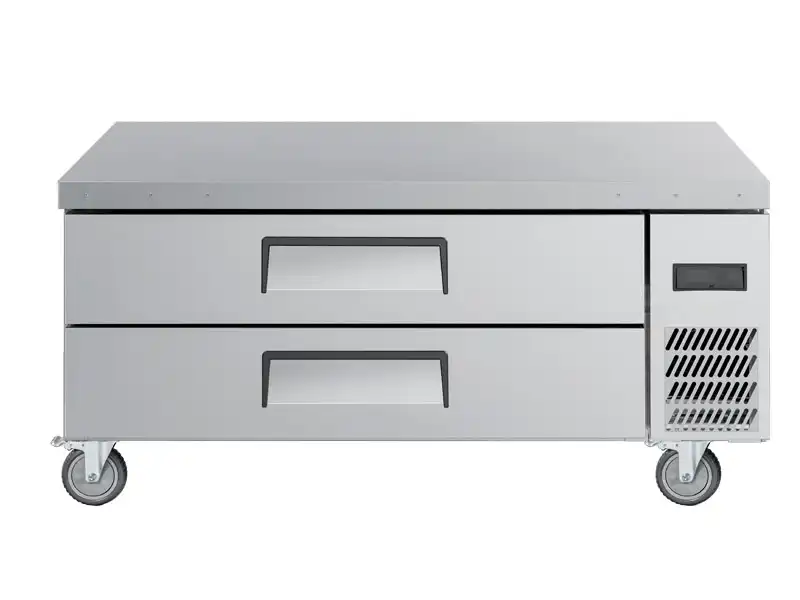
A Chef Base like the Camay 60″ Countertop Refrigerated Chef Base (Model MAR-60A) illustrates how equipment can serve multiple functions. It combines cold storage with a solid worktop, and the 4-inch casters mean you can reposition it as your layout needs evolve. Having ingredients within arm’s reach while maintaining a durable prep surface eliminates trips to the walk-in and keeps the line moving.
| Feature | Camay MAR-60A Chef Base | Camay MWTF-27-L Worktop Freezer |
|---|---|---|
| Function | Refrigerated Prep/Storage | Freezer Worktop |
| Temperature | 0.5°C to 5°C | -25°C to -15°C |
| Construction | Stainless Steel | Stainless Steel |
| Mobility | 4-inch Casters | Optional 2-inch Casters |
| Refrigerant | R290 | R290 |
| Capacity (L) | 117 | 202 |
Specialized equipment like Pizza Table units, such as the VRX395-1600, solve specific workflow problems. Refrigerated ingredient storage right at the pizza station means toppings stay at safe temperatures while remaining instantly accessible. For high-volume pizza operations, this kind of integration makes a measurable difference in both speed and consistency.
Integrating Advanced Refrigeration for Efficiency and Safety
Refrigeration sits at the center of any serious commercial kitchen. The right units in the right positions affect food safety, energy costs, and how smoothly the kitchen operates minute to minute. ZHEJIANG KAIMEI’s equipment brings reliability to this critical function, supporting both cold storage needs and food safety requirements without creating maintenance headaches.
What refrigeration equipment is essential for an optimized commercial kitchen?
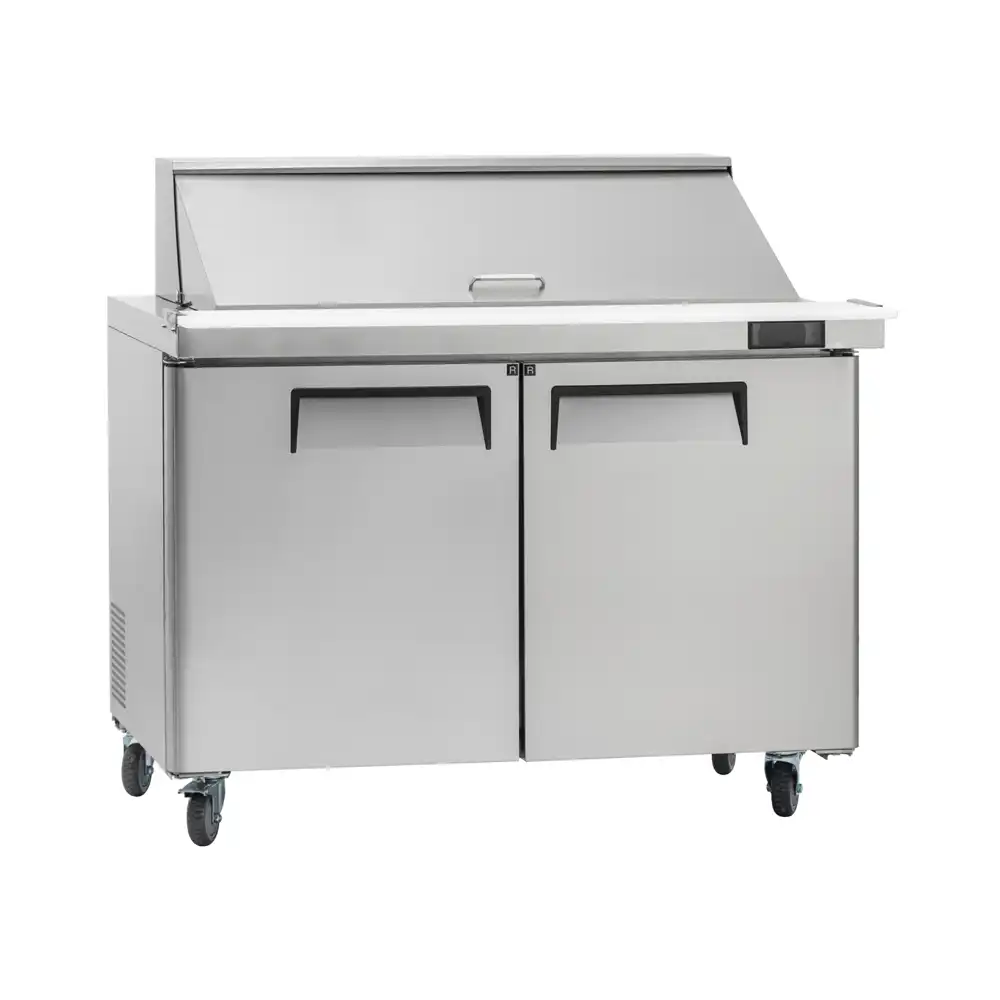
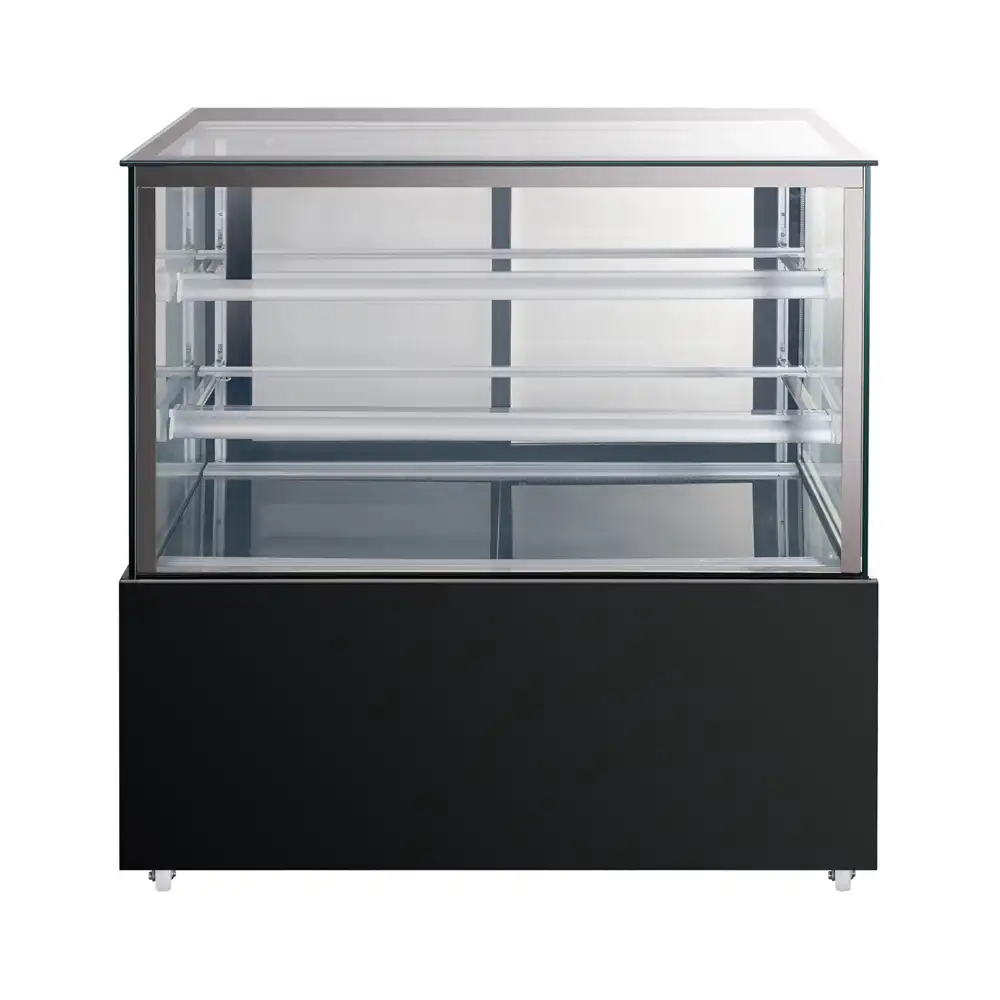
Different refrigeration needs call for different solutions. Walk-in coolers and freezers handle bulk storage and receiving. Under Counter units like the Camay Commercial Undercounter Refrigerator (Model MTR-60) put frequently used ingredients right where cooks need them at prep stations. Prep tables such as the 13 Cuft Salad Storage Container for Fridge (Model MSR-48M) and Pizza Table (Model VRX395-1600) build refrigerated storage directly into work surfaces. Display cases like the Commercial Cake Display Cooler (SKU: DWG-1800ZA) keep finished products at proper temperatures while showcasing them to customers. Each piece serves a specific function in the overall flow.
Solid Door Freezer Cooler units like the Camay Commercial Solid Door Undercounter (Model MTR-72) deliver reliable storage with tight temperature control. Stainless steel construction handles the abuse of commercial use, and R290 refrigerant keeps energy costs reasonable while meeting environmental standards. For specialized applications requiring ultra-low temperatures, the -86°C ULT Freezer (Model DW45W788) handles those demanding storage requirements.
Smart refrigeration placement amplifies efficiency gains throughout the kitchen. A well-positioned Chef Base cuts walk-in trips dramatically, saving time and keeping cooks at their stations. For more on how these units can reshape your kitchen workflow, see 《Boost Kitchen Efficiency Workflow Optimization with Chef Base Fridges》.
Ergonomics and Safety in Commercial Kitchen Layouts
How a kitchen feels to work in matters as much as how it looks on a floor plan. Layouts that ignore ergonomics burn out staff and create injury risks. Proper design reduces the repetitive motions and awkward reaches that wear people down over a shift. When cooks can work comfortably, they work faster and make fewer mistakes. Safety and productivity aren’t competing priorities—they reinforce each other.
Adequate movement space prevents the collisions and near-misses that slow everything down during busy service. Non-slip flooring and clearly marked emergency exits are baseline requirements. Equipment placement affects safety too: hot stations need separation from high-traffic paths, and heavy equipment needs stable positioning. These considerations create kitchens where staff can focus on cooking rather than navigating hazards.
Future Proofing Your Commercial Kitchen Investment
A kitchen built only for today’s menu becomes a constraint when the business evolves. Smart design anticipates change—new dishes, different volume levels, equipment upgrades. Flexibility built into the original layout protects the investment and keeps renovation costs manageable as needs shift. Scalability isn’t just about growth; it’s about adaptability.
Modular equipment and versatile workstations allow reconfiguration without major construction. Refrigeration units with optional casters, common across many ZHEJIANG KAIMEI models, can relocate as workflow patterns change. Building in capacity for new technology and sustainable practices positions the kitchen for long-term relevance rather than premature obsolescence.
Frequently Asked Questions About Kitchen Layout Optimization
How does kitchen layout impact operational efficiency and staff productivity?
A well-optimized layout cuts unnecessary movement and eliminates the bottlenecks that slow service. Staff complete tasks faster with less physical strain when equipment and stations sit where the work actually happens. Proper zoning for prep, cooking, and washing creates logical flow patterns that reduce confusion and improve communication. The result shows up in ticket times, output volume, and how your team feels at the end of a shift.
What are the common mistakes to avoid in commercial kitchen design?
Cramped space planning tops the list, followed by inadequate ventilation and undersized refrigeration capacity. Ignoring actual workflow patterns leads to layouts that look reasonable but function poorly. Placing heat-generating equipment next to refrigeration units, skipping proper clearances, and failing to plan for growth all create problems that compound over time. Health code compliance and traffic flow deserve attention early in the design process, not as afterthoughts.
Can an optimized kitchen layout reduce energy consumption?
Significantly. Keeping refrigeration units away from heat sources reduces compressor workload. Proper ventilation design prevents the kitchen from fighting itself thermally. Efficient workflow means less opening and closing of cooler doors, less reheating of food that sat too long, and less overall energy waste. Energy-efficient ZHEJIANG KAIMEI equipment combined with thoughtful layout design lowers utility costs while reducing environmental impact.
Partner with ZHEJIANG KAIMEI for Your Kitchen Solutions
Elevate your commercial kitchen’s efficiency and profitability. Partner with ZHEJIANG KAIMEI CATERING EQUIPMENT CO., LTD for expert refrigeration solutions tailored to your optimized layout. Contact us today at +8618157202219 or Sales@hzcamay.com for a consultation.